Skip to content
RPU · Regional Processing Unit

A modular infrastructure building block.

The conceptual RPU combines thermal treatment, mineral recovery and supporting systems. Its configuration is designed around material quality and local requirements, not a guaranteed one-size-fits-all deployment.

Conceptual design basis

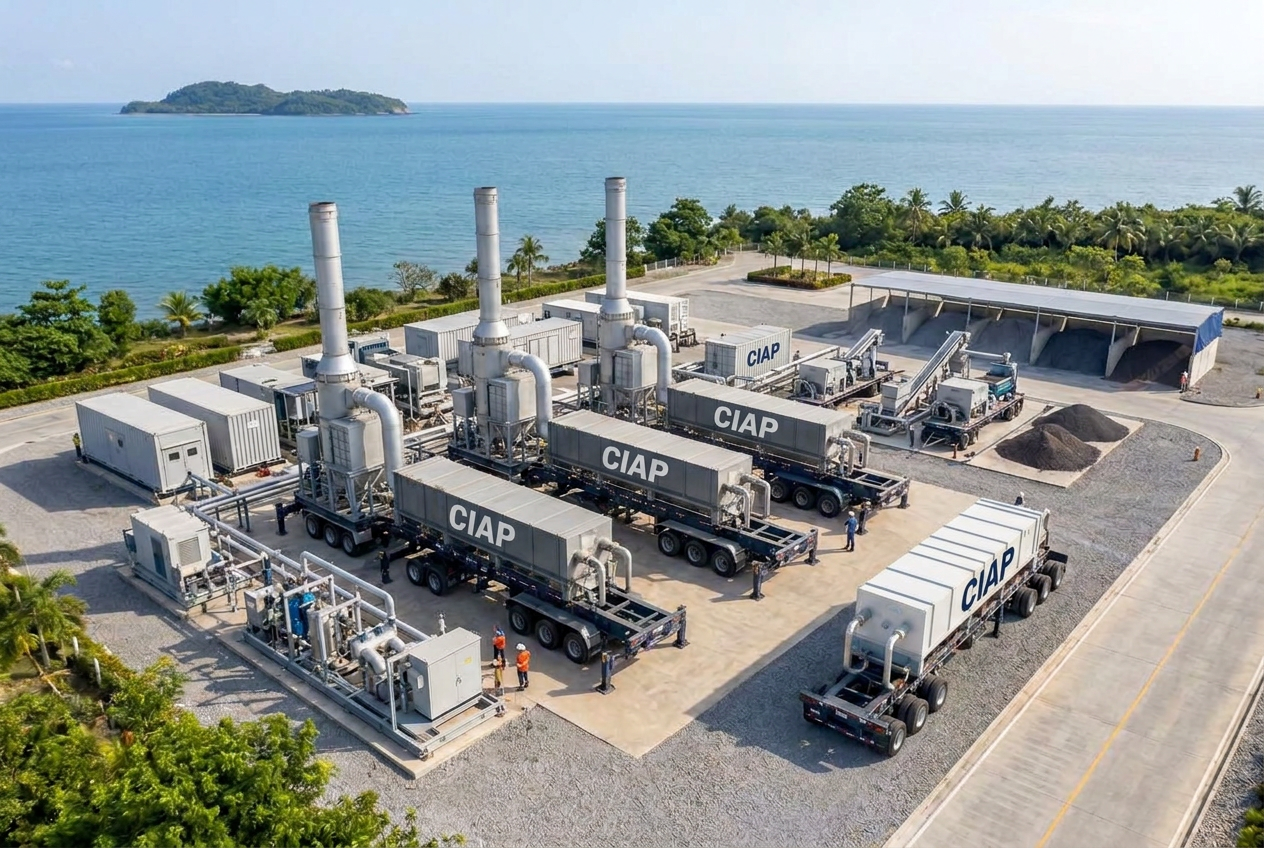
Three thermal modules. One integrated materials pathway.

Conceptual coastal modular facility with three parallel thermal modules and separate mineral processing
CONCEPT VISUALISATION · Illustrative arrangement, not a built installation or validated engineering layout.
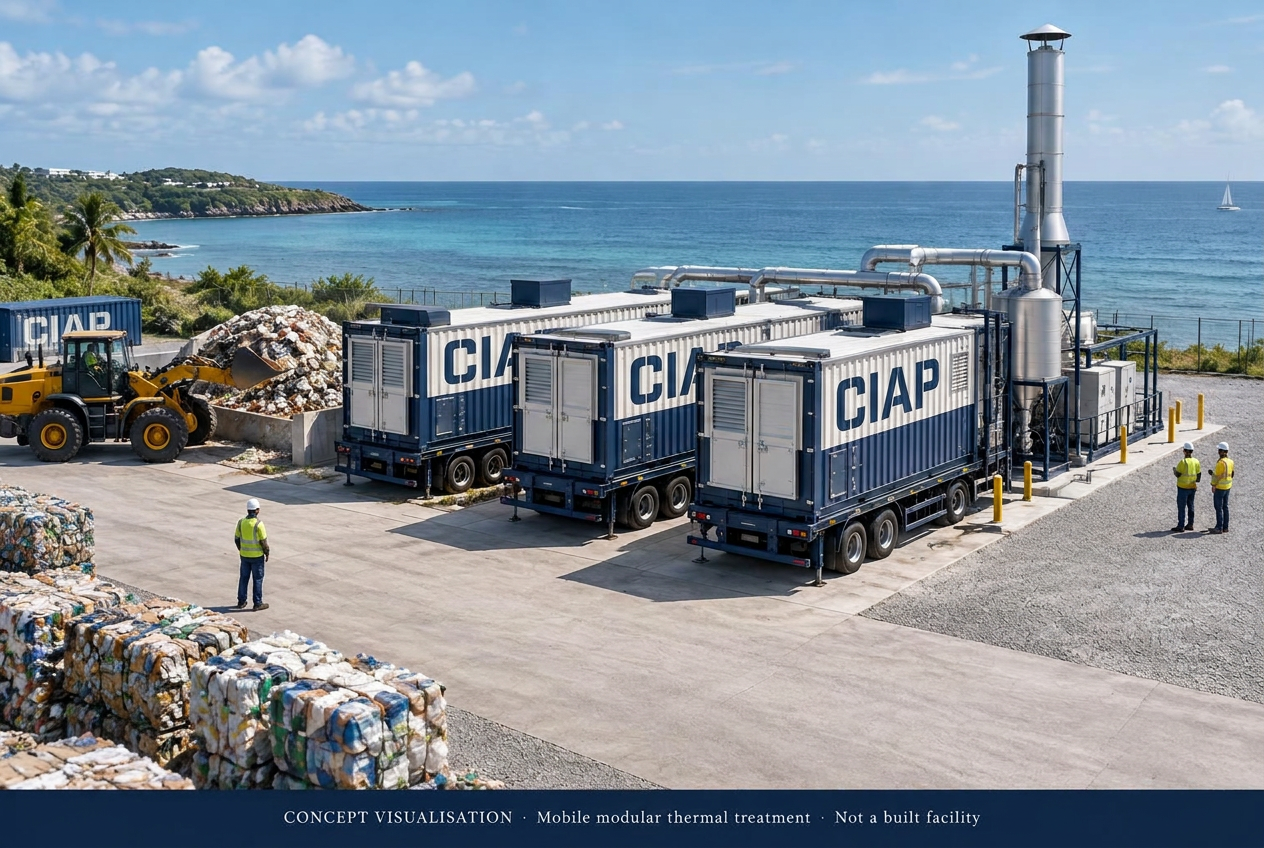
Illustrative mobile modular thermal treatment plant with three containerised modules on transportable chassis at a coastal site
CONCEPT VISUALISATION · Mobile modular thermal treatment · Not a built facility.
Overall conceptual basis
≈100 tonnes/day
Thermal modules
3 × ≈30 t/day
Materials systems
Mineraliser + pelletiser
Configuration
Land-based first

Conceptual, not validated capacity: three approximately 30 t/day thermal units total approximately 90 t/day. The approximately 100 t/day overall configuration is a separate indicative basis; feasibility must reconcile feedstock routing, mass balance and operating availability. No annual throughput is guaranteed.

  1. 1Waste in
  2. 2Sorted and treated
  3. 3Potential construction materials and useful by-products
Materials development

Build on APCR. Validate the IBA opportunity.

Established route · APCR

Air-pollution-control residue.

APCR is the primary material in the established accelerated-carbonation aggregate route. This provides a technology precedent—not evidence that the integrated CIAP platform is already demonstrated.

RPU development objective · IBA

Incinerator bottom ash.

Adapt the process and plant so IBA can potentially achieve comparable aggregate performance and applicable leaching requirements. The opportunity is to extend the usable mineral resource beyond APCR—not to claim that IBA compliance has been achieved.

APCR and IBA are distinct residues, not interchangeable feedstocks or an automatic combined mix. Each route requires characterisation, suitable treatment, physical-property and leaching tests, and approval for the intended end use. Remaining unsuitable residues need compliant management.

Review technology precedent and ownership
System elements

The process and the support infrastructure.

Moving-grate thermal units

Current design basis for suitable residual waste. Alternative established thermal technologies will be assessed for ash quality and feedstock suitability.

Mineraliser and pelletiser

Conditioning and mineral recovery followed by potential aggregate and construction-material production; local product safety and quality require testing.

Supporting systems

Sorting and metals recovery, emissions control, utilities, storage, controls and potential heat/water/energy recovery, subject to engineering design.

Follow the detailed process and product branches
Deployment options

Land-based. Modular. Potentially mobile.

Land-based operation is the primary arrangement. Mobile and potential barge-mounted deployment depend on transport, marine feasibility, site readiness, safety and permitting. Shared capability does not promise a dedicated unit or fixed visit schedule for each island.

Explore shared deployment
Local employment

Potential jobs across the whole resource pathway.

Local materials production can support employment beyond the processing plant: skilled operations, maintenance, deliveries and shared services. Training and local workforce development would form part of deployment planning.

Block and aggregate manufacturing

Potential roles in block manufacture, aggregate production, material testing, quality control and product dispatch—keeping more construction-material value locally.

Metals extraction and recovery

Sorting, metals separation and recovery, equipment operation and preparation of recovered metals for local use or onward sale.

Thermal treatment and waste-to-energy

General thermal-treatment (incineration) operation, emissions monitoring, maintenance and site safety, with waste-to-energy operating roles where energy recovery is viable.

Sand batteries and heat delivery

Where feasible, sand-battery thermal-storage operation and maintenance, alongside logistics and deliveries for useful heat services.

Desalination and water delivery

Potential desalination plant operation, water-quality monitoring, maintenance, storage and water deliveries where a viable, approved water system is included.

Marine work and disaster response

Potential barge crews, marine engineering, mooring and transport roles where barge deployment is feasible; post-disaster response planning, logistics and safe debris-processing operations where authorised.

These are potential employment pathways, not confirmed jobs, recruitment offers or job-count forecasts. Roles depend on feasibility, local demand, funding, approvals, safety requirements and training. Energy, sand-battery, desalination, marine and disaster-response activities are conditional options, not committed services.

Readiness

A configuration to engineer and demonstrate.

The plan places the CIAP-specific configuration at TRL 4–5, distinct from the lower maturity of the fully integrated platform. Module integration, material performance and operational availability must be demonstrated through feasibility and pilot work.

Review the maturity pathway