Mineralised aggregates
Commercially demonstrated components · local validation required
Conditioned mineral residues assessed as aggregate replacement. Local ash chemistry, leaching and construction specifications determine suitability.
Waste can become a potential local resource. CIAP prioritises mineral and construction-material recovery, with energy and water as secondary value streams—not guaranteed outputs.
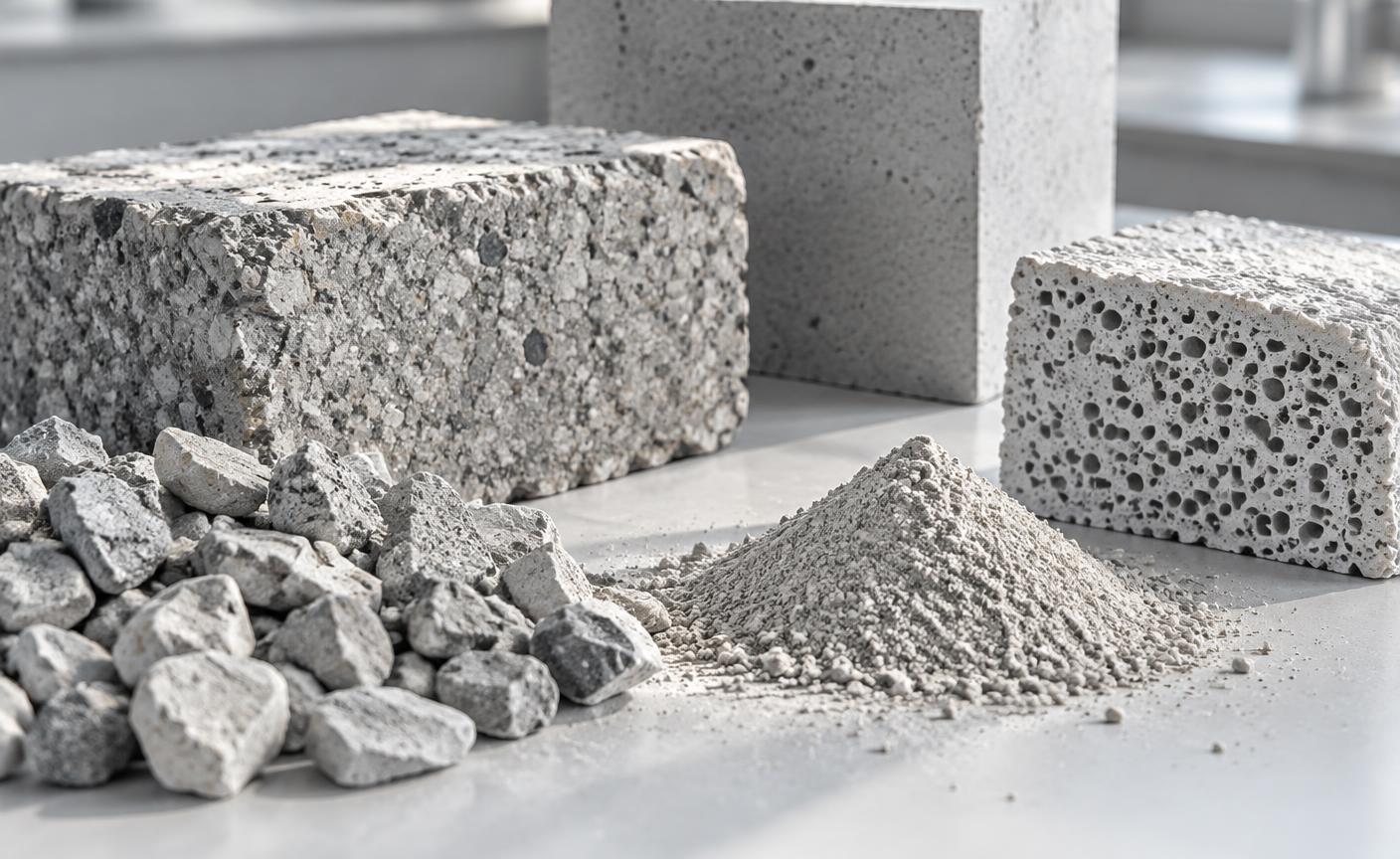
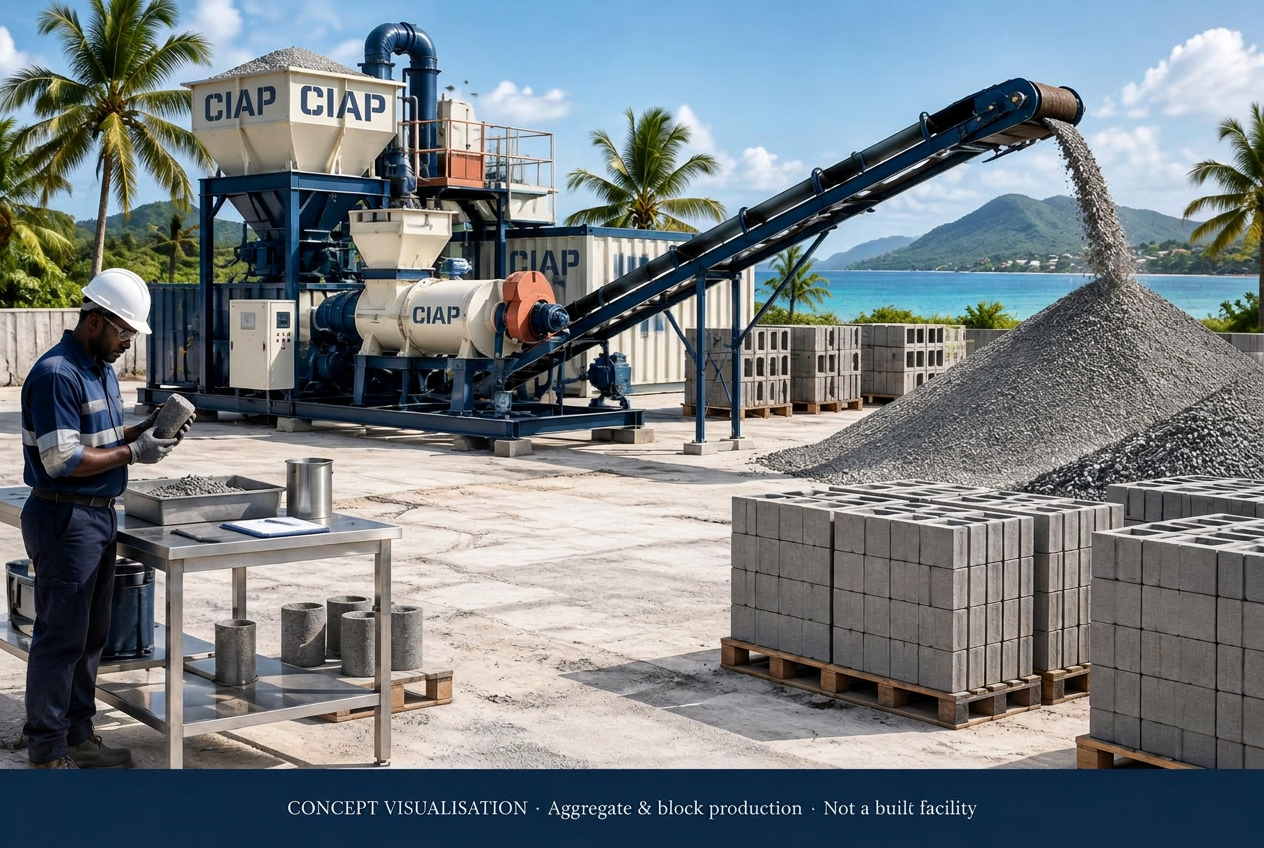
Conditioned mineral residues assessed as aggregate replacement. Local ash chemistry, leaching and construction specifications determine suitability.
Potential local block manufacture using compliant recovered mineral material, subject to mix design, durability and strength testing.
Biomass-derived supplementary cementitious materials investigated for partial substitution in construction mixes. Performance is feedstock-specific.
A potential lightweight construction pathway for suitable MSW-derived mineral fractions. Product safety and performance must be demonstrated.
Mineralised and potentially vitrified aggregate routes require process selection and product testing. Vitrification is not represented as a validated CIAP installation. No ash fraction is automatically suitable for construction.
Established route · APCR
APCR is the primary material in the established accelerated-carbonation aggregate route. This provides a technology precedent—not evidence that the integrated CIAP platform is already demonstrated.
RPU development objective · IBA
Adapt the process and plant so IBA can potentially achieve comparable aggregate performance and applicable leaching requirements. The opportunity is to extend the usable mineral resource beyond APCR—not to claim that IBA compliance has been achieved.
APCR and IBA are distinct residues, not interchangeable feedstocks or an automatic combined mix. Each route requires characterisation, suitable treatment, physical-property and leaching tests, and approval for the intended end use. Remaining unsuitable residues need compliant management.
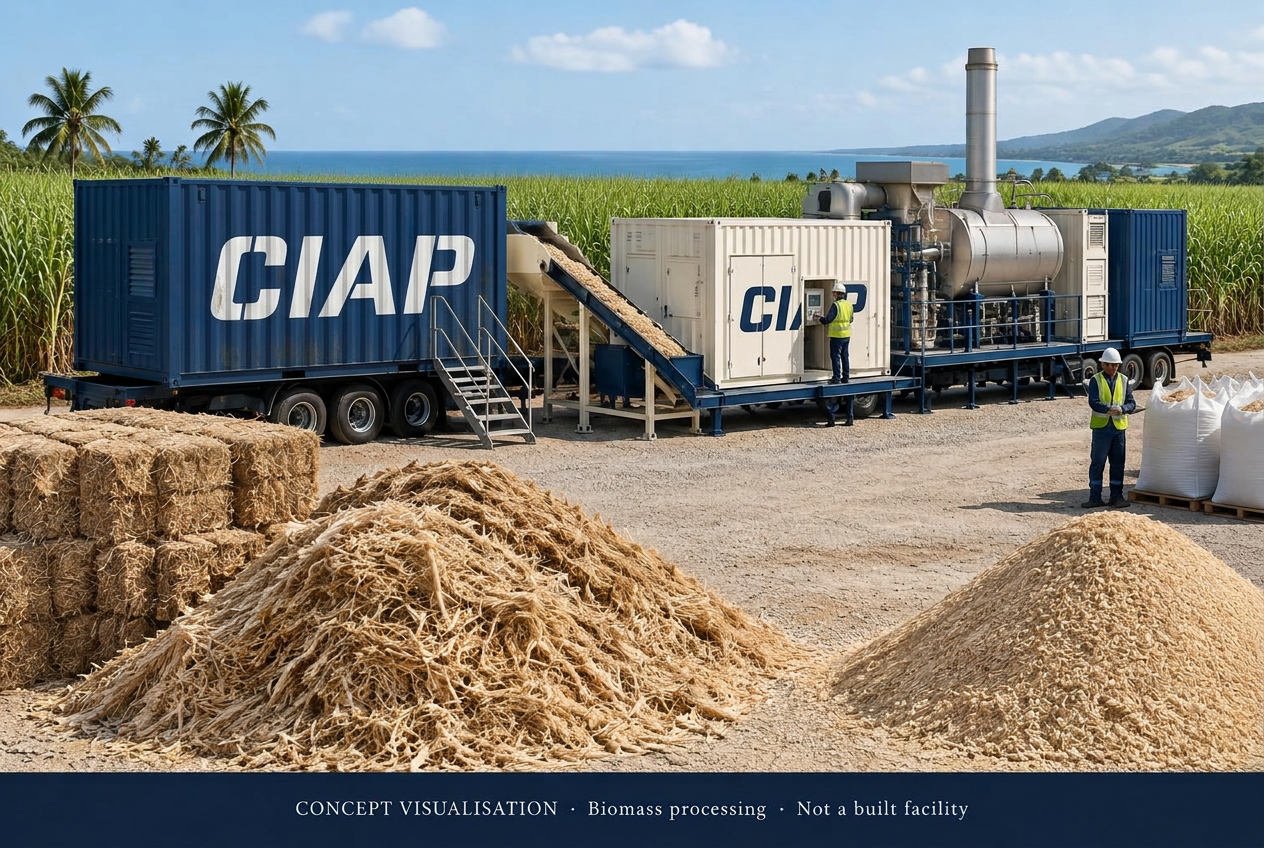
Chemical extraction and biomass-derived SCM are feedstock-specific research pathways. Suitable organics also have a parallel composting route; they are not required to pass through thermal treatment.
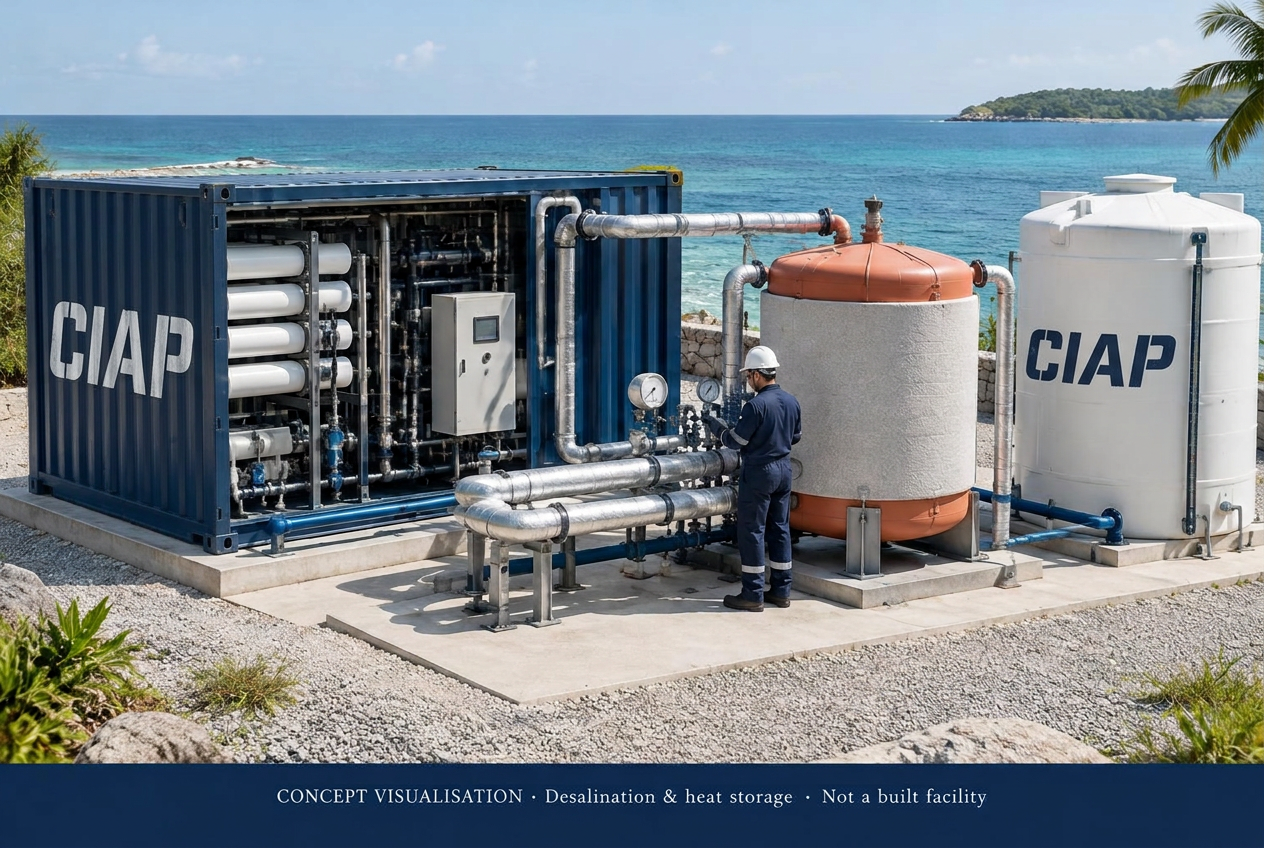
Secondary value streams · subject to feasibility and demand
No water output or zero-residual-waste outcome is guaranteed. Mineralisation may generate carbon benefits, subject to verification.
Local materials production can support employment beyond the processing plant: skilled operations, maintenance, deliveries and shared services. Training and local workforce development would form part of deployment planning.
Potential roles in block manufacture, aggregate production, material testing, quality control and product dispatch—keeping more construction-material value locally.
Sorting, metals separation and recovery, equipment operation and preparation of recovered metals for local use or onward sale.
General thermal-treatment (incineration) operation, emissions monitoring, maintenance and site safety, with waste-to-energy operating roles where energy recovery is viable.
Where feasible, sand-battery thermal-storage operation and maintenance, alongside logistics and deliveries for useful heat services.
Potential desalination plant operation, water-quality monitoring, maintenance, storage and water deliveries where a viable, approved water system is included.
Potential barge crews, marine engineering, mooring and transport roles where barge deployment is feasible; post-disaster response planning, logistics and safe debris-processing operations where authorised.
These are potential employment pathways, not confirmed jobs, recruitment offers or job-count forecasts. Roles depend on feasibility, local demand, funding, approvals, safety requirements and training. Energy, sand-battery, desalination, marine and disaster-response activities are conditional options, not committed services.
Validation must cover chemistry, contaminants, leaching, strength, durability, quality control, applicable standards and local offtake. Historic landfill restoration needs separate assessment, remediation and approval. Carbon benefits remain subject to verification.
See the research and validation pathway